Monday, May 12, 2014

Brazil: State of Espírito Santo

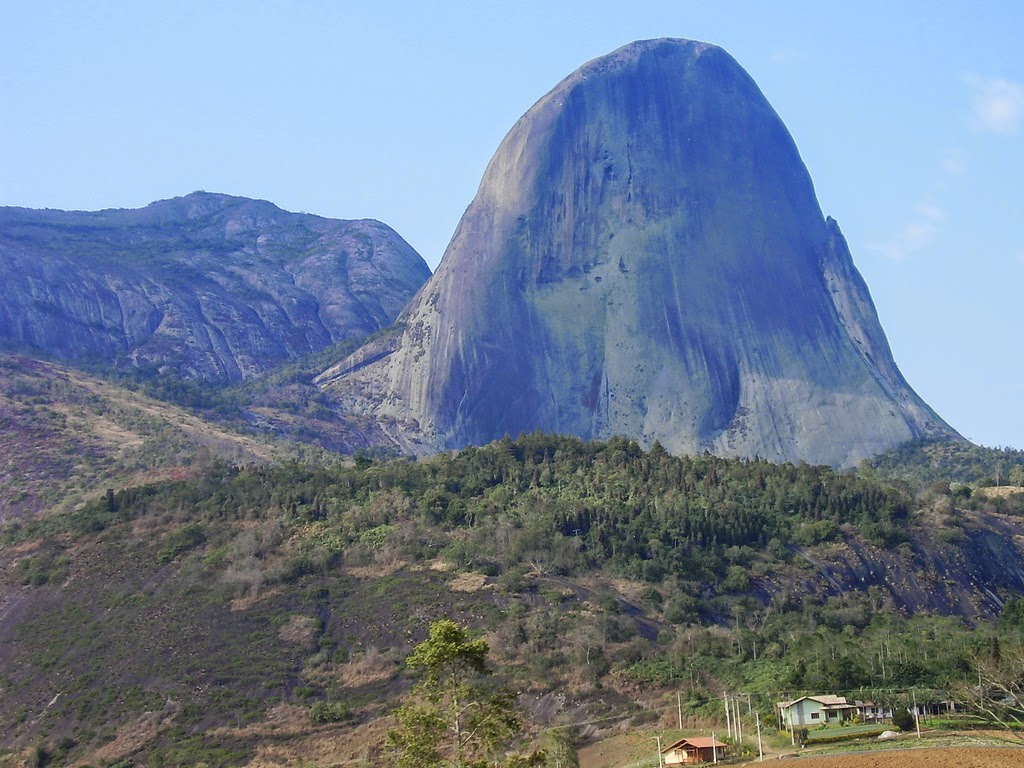
The Blue Stone, in National Park of Pedra Azul (Blue Stone)

Espírito Santo, directly translated to “Holy Spirit” in English, is a Brazilian state situated in the southeast of this intriguing South American country. Because of its extensive coastline, this state is well known for its sand dunes, ports, and beaches. It is also acclaimed for the forró, a unique style of dance.

Tourism attractions in Espírito Santo include:

• Guarapari (renowned for its curative black sand beaches)

• Jacaraípe and Manguinhos (both coastal areas)

• Domingos Martins (a spectacular mountain retreat) (source: brazilsite)


Espírito Santo is often referred to by the abbreviation "ES". Its capital is Vitória and the largest city is Vila Velha. The name of the state means literally "holy spirit" after the Holy Ghost of Christianity. With an extensive coastline (40% of the territory is on the coast), the state has some of the country's main ports, but the beaches are the most significant tourist attractions. 
Canaã valley in Espirito Santo's mountains, there is on the way of Santa Maria de Jetibá. Photo wikipedia. Author: Junior Pedruzzi

National Park of Caparaó. Photo: wikipedia 

With trails that go through natural pools and viewpoints through the Atlantic Forest, the National Park of Pedra Azul in Domingos Martins (ES) is worth a visit. The Blue Stone, main attraction, is covered with lichens that change color according to the incidence of the sun. Photo by viajeaquiabril)
Vitória, ES. Photo Flickr by visitbrasil
The Nossa Senhora da Penha chapel, in Old Town, is the main religious monument in the state of Espírito Santo. Besides the beautiful view of the city, the chapel guard the image of Our Lady of Penha, patron saint of the State. Beside, three rooms function as sacred museum, shop and ex-votos room. Photo by viajeaquiabril
Vila Velha, ES. Photo wikipedia
 
Vitória, the capital, is on an island, next to Guarapari, well known for its sands. In the extreme north is the Itaúnas part of the municipality of Conceição da Barra, whose sand dunes and forró are famous. Also on the coast, the typical cuisine is another attraction with the moquecas capixabas and many fruits from the ocean and seafood. In the country of the state there are many natural attractions such as the parks of Pedra Azul and Serra do Caparaó, and the Italian and German colonies.

The people born in Espirito Santos are called "Capixabas" (source: wikipedia)

In 1998, the United Nations rated Vitória as the fourth best state capital in Brazil to live in, rating cities on health, education, and social improvement projects.

WATCH THIS VIDEO ABOUT ESPIRITO SANTO:


Espírito Santo is bordered on the south by Rio de Janeiro state and on the north by Bahia. The coast has miles and miles of wonderful beaches, backed by the same spectacularly beautiful granite domes and mountains that famously frame Rio de Janeiro's landscape. Because of the long coastline, Espírito Santo's gastronomy is dominated by fish and seafood and the state is famous for its unique way of making fish and seafood moquecas - highly seasoned stews. Espírito Santo and Bahia States are both famous for moquecas, but each has its own tradition. Bahian moquecas use coconut milk seasoned with dendê oil to provide the base for the stew; in Espírito Santo the broth is based on coconut milk, tomatoes and onions. (from: flavorsofbrazil).

Fish "moqueca". Photo Flickr by visitbrasil

Located in the Upper City, the Metropolitan Cathedral of Vitoria (ES) has neogothic style and stained glass with biblical passages.


Friday, May 2, 2014

BRAZIL: The Federal District

Brasília, DF
The Federal District of Brazil is not a state, but stands apart as a district, reserved for Brazil’s capital city, Brasília. As such, it cannot be divided into municipalities, but is split into 29 administrative regions. Brasilia is the home of the three branches of the Federal Government; namely the Executive, Judicial and Legislative branches. The Federal District of Brazil covers a total square kilometer area of 5 802, which is just over 2 200 square miles, and boasts a population of more than 2.4 million people, making it the 4th most populous city in Brazil. The city was founded on April 21, 1960, to serve as the new national capital.

Brasília has a unique status in Brazil, as it is an administrative division rather than a legal municipality like other cities in Brazil. Nationally, the term is almost always used synonymously with the Federal District, which constitutes an indivisible Federative Unit, analogous to a state. Several "satellite cities" (suburbs) are also part of the Federal District.

Among major Latin American cities, Brasília has the highest GDP per capita at US$36,175.

The history of the Federal District of Brazil is relatively young, since it is not a significant geographical area, but an administrative one. Brasília was planned and developed by Lúcio Costa and Oscar Niemeyer in 1956 in order to move the capital from Rio de Janeiro to a more central location. The landscape architect was Roberto Burle Marx. The city's design divides it into numbered blocks as well as sectors for specified activities, such as the Hotel Sector, the Banking Sector and the Embassy Sector. In April of 1960, the civil government was transferred from Catete Palace in Rio de Janeiro to Brasilia.

The capital city is a very structured one. Streets are not named but are assigned letters and numbers according to blocs and sectors. There are residential areas as well as commercial ones, and the Federal District is amply equipped with the necessary infrastructure to sustain its community. Due to overpopulation in Brasilia, many are being forced to move further afield. Almost 100% of the Brasilian residents stay in the urban epicenter.

In 1987, Brasilia was chosen as a UNESCO World Heritage Site due to its modernist architecture.
(search: brazilsite and wikipedia)

Popular places to be visited:

Itamaraty Palace: It's the headquarters of the Ministry of External Relations of Brazil.

The Palácio do Planalto:  It's the official workplace of the President of Brazil.


The Palácio da Alvorada: It's the official residence of the President of Brazil.


The National Congress of Brazil (Portuguese: Congresso Nacional do Brasil) is the legislative body of Brazil's federal government.Unlike regional legislative bodies – Legislative Assemblies and City Councils -, the Congress is bicameral, composed of the Federal Senate (the upper house) and the Chamber of Deputies (the lower house).

Cathedral of Brasilia: It's the Roman Catholic cathedral serving Brasília, Brazil, and serves as the seat of the Archdiocese of Brasília.


Cathedral, interior. Photo: blog fotosedestinos
The Esplanade of Ministries houses 17 buildings of uniform construction, designed by architect Oscar Niemeyer. It are the ministries buildings. Many important government buildings, monuments and memorials are located on the Monumental Axis. Located in the center of the two avenues that make up the Monumental Axis (Eixo Monumental, in Portuguese) in Brasilia, its central lawn is often the scene of various events such as concerts, parades or public demonstrations. The avenue begins on the National Congress of Brazil building and is considered part of the DF-002 road. 

The National Congress, one of three monumental buildings that define the Three Powers Plaza, has its front facing the Esplanade. The Metropolitan Cathedral of Brasilia is also located on the Esplanade of Ministries.

Esplanada dos Ministérios


The Supreme Federal Court (Portuguese: Supremo Tribunal Federal,  abbreviated STF) is the supreme court (court of last resort) of Brazil, serving primarily as the Constitutional Court of the country. It is the highest court of law in Brazil for constitutional issues and its rulings cannot be appealed. On questions involving exclusively lower legislation, the highest court is, by rule, the Superior Court of Justice.


Three Powers Plaza: The name is derived from the presence of the three governmental powers around the plaza: the Executive, represented by the Palácio do Planalto (presidential office); the Legislative represented by the Congresso Nacional (National Congress); and the Judiciary, represented by the Supremo Tribunal Federal (Federal Supreme Court).

The plaza was designed by Lúcio Costa and Oscar Niemeyer as a place where the three powers would meet harmoniously, it has now become a tourist attraction of Brasília.


Water cascades between the arches of the Palácio da Justiça into a koi fish pond.Photo: brasiliafotos

MEMORIAL JK. The tomb of JK (President Juscelino Kubitschek, The President that built Brasilia, the capital of Brazil ) lies underneath eerily beautiful stained glass by French artist Marianne Peretti inside the Memorial JK.

Santuário Dom Bosco, church in Brasilia, Brazil

The City Park (Parque da Cidade) – over four million square meters to explore, including sports courts, racing kart track, playgrounds, walking trails and a horse track.
Photo flickr by JorgeinBrazil

Photo flickr by JorgeinBrazil


National Museum. Photo panamsur

National Museum of the Republic (Museu Nacional da República). Photo: blog edsonmachado

The Juscelino Kubitschek Bridge (Portuguese: Ponte Juscelino Kubitschek), also known as the President JK Bridge or just the JK Bridge, is a steel and concrete bridge that crosses Lake Paranoá in Brasília. Juscelino Kubitschek was the Brazilian President who in the late 1950s decided to build Brasília as the new capital of the country.


CHANGING OF THE GUARD PRESIDENTIAL.  Photo palaciodoplanalto


Central Bank of Brazil (Banco Central do Brasil)

Metro

The Brasilia Music Festival.