Showing posts with label Carnival. Show all posts

Wednesday, December 6, 2017

Beautiful colonial Olinda - a gem in the northeast of Brazil

The most pictures here from google

It is a city in the north-eastern Brazilian state of Pernambuco. It's set around a tree-covered hill 6km north of Recife.

Olinda features a number of major tourist attractions, such as a historic downtown area (World Heritage Site), churches, and the Carnival of Olinda, a popular street party, very similar to traditional Portuguese carnivals, with the addition of African influenced dances. In Olinda, admission to Carnival is free. All the festivities are celebrated on the streets, and there are no bleachers or roping. 

There are hundreds of small musical groups (sometimes featuring a single performer) in many genres.
The main outlook of the city is the Alto da Sé where you can admire the historic buildings and the ocean. Located here is the Seminary, with its Brazilian Jesuit architecture whilst nearby are the Palace of the Governors, the Contemporary Art Museum and the Eufrasio Barbosa Market.

Besides its natural beauty, Olinda is also one of Brazil's main cultural centers. Declared in 1982 a Historical and Cultural Patrimony of Humanity by the UNESCO, Olinda relives the magnificence of the past every year during the Rio-style Carnival, on the rhythms of frevo, maracatu and others rhythms.
Frevo dancers

Carnival


The main economic activities in Olinda are based in tourism, commerce, transportation industry and artcraft. The tourist sector has a boom every Carnival when thousands of people are in the old historic town center. (wikipedia).

With twisting streets of colorful old houses and gorgeous vistas over tree tops, church towers and red-tile roofs, this is one of the best-preserved and prettiest colonial towns in Brazil. 

Walking around the cobbled streets, stopping in front of each beautifully colored house, snapping pictures at every corner is very pleasant. Olinda is photographic heaven.

The impressive historical buildings pair well with the cultural diversity of the town which can be seen everywhere, whilst the fabulous lookouts onto the ocean, the handicraft markets and its rich cuisine will delight visitors.


For arts and crafts, Olinda is considered an open air museum bringing together an historic site with more than 80 artists’ studios of national and international reputation whilst throughout the Cidade Alta there are numerous stalls of local artisans selling carvings, sculptures and embroideries.

If you are visiting the north-east of Brazil on holiday then Olinda is a must see.


Photo by Flickr MCM Photography


Tuesday, April 8, 2014

Wednesday, February 12, 2014

SALVADOR'S CARNIVAL: THE BIGGEST PARTY ON THE PLANET!

Considered Brazil’s “Capital of Happiness,” the friendly and welcoming residents of Salvador de Bahia – known simply as ‘Salvador’ – are deservedly proud of their northeast capital city, blessed as it is with a historically-rich past, gorgeous beaches, and one of the best Carnival celebrations in the world.

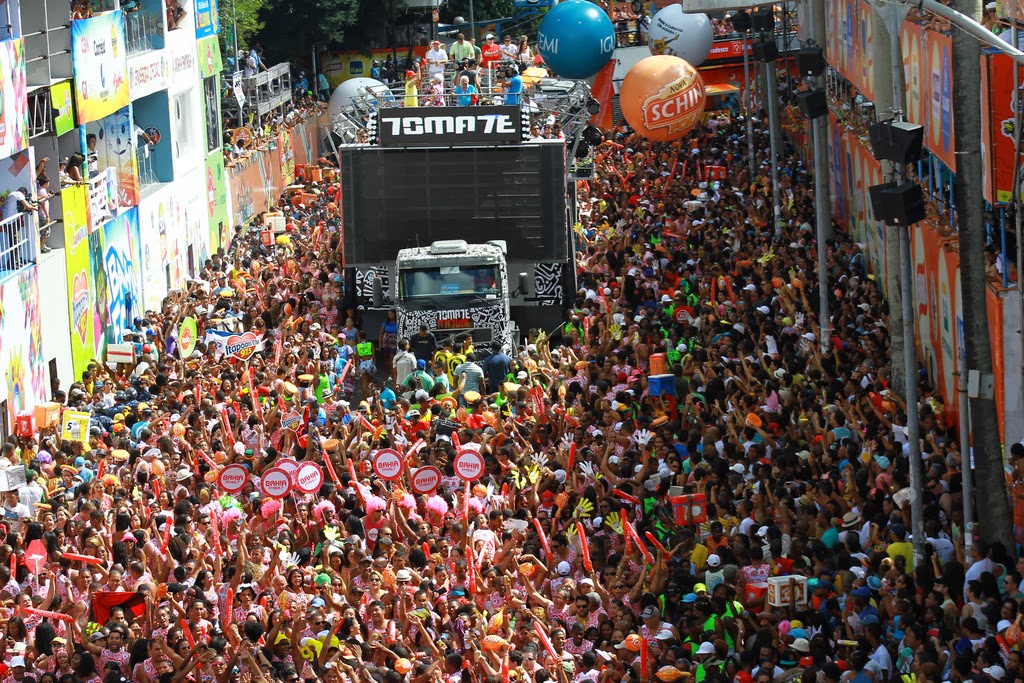
According to the Guinness Book of Records, the carnival or Carnaval of Salvador da Bahia is the biggest party on the planet. For an entire week, almost 4 million people celebrate throughout 25 kilometers (16 mi) of streets, avenues and squares. The direct organization of the party involves the participation of over 100,000 people. Its dimensions are gigantic. Salvador receives an average of over 800,000 visitors.

The cover was done by 4,446 professionals in local press, national, and international. The carnival was broadcast to 135 countries through 65 radio stations, 75 magazines, 139 producers of video, 97 newspapers (21 international), 14 tv stations, and 168 websites.

Rei Momo: The King of Carnival, Momo, is handed the keys to the city in the morning, on the Thursday before Fat Tuesday, and the party officially begins. Camarotes: These grandstands line the street in the neighborhoods of Campo Grande, Barra Avenue and Ondina. Watch the show from here without being trampled by the crowd. Trios Eléctricos: Outfitted with deafening sound systems, these 60-foot-long trucks carry a kick line of gyrating, scantily clad dancers along with the city's best-loved performers, among them Ivete Sangalo, Daniela Mercury, Cláudia Leitte, Chiclete com Banana, Carlinhos Brown, and others.
Rei Momo (flickr by turismobahia)
 All pictures are from flickr turismobahia
Camarote

Ivete Sangalo, on her trio elétrico

Ivete Sangalo, another day

Trio elétrico

Chiclete com Banana trio elétrico

Bel Marques, band singer

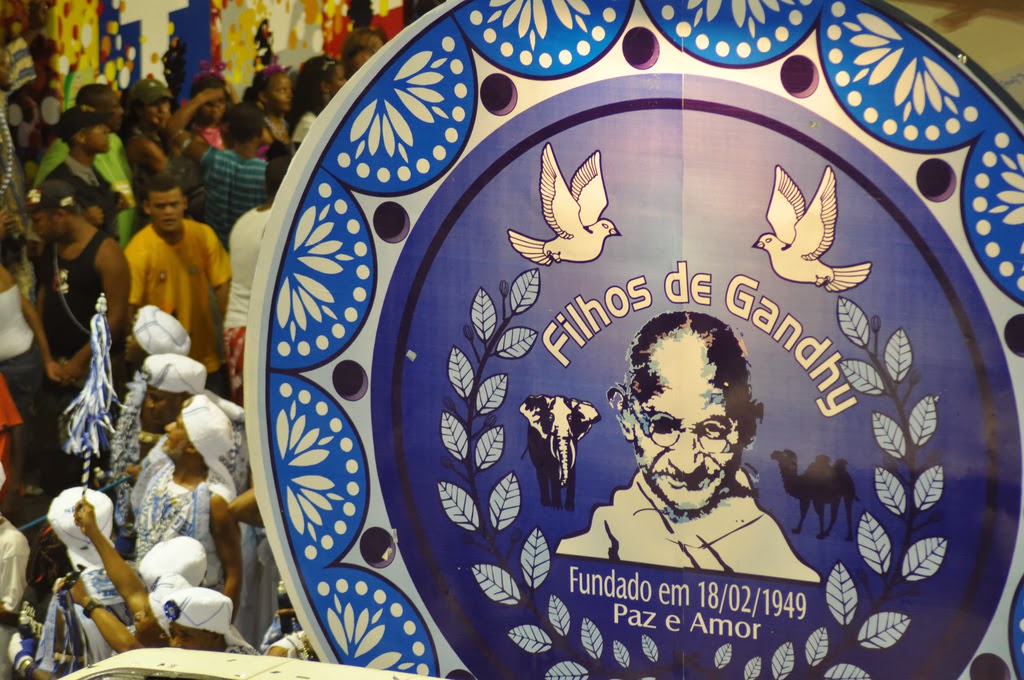
 The music played during Carnaval includes Axé and Samba-reggae. Many "blocos" participate in Carnaval, the "blocos afros" like Malê Debalê, Olodum and Filhos de Gandhy being the most famous of them. Carnival is heavily policed. Stands with five or six seated police officers are erected everywhere and the streets are constantly patrolled by police groups moving in single file.
"bloco afro"

Bloco Filhos de Gandhy


Filhos de Gandhy

Malê Debalê


Olodum
Olodum

Bloco afro Malê Debalê

Bloco afro Malê Debalê

The Osmar Circuit: goes from Campo Grande to Castro Alves square, The Downtown Circuit, in Downtown and Pelourinho, and The Dodô Circuit; goes from Farol da Barra to Ondina, along the coast. The Osmar circuit is the oldest circuit. It is also where the event's most traditional groups parades. In Dodô, where the artist box seats are located, the party becomes lively toward the end of the afternoon and it continues until morning.(search: wikipedia.org)

Salvador is considered the Afro-Brazilian capital of the nation and with over 80% of the population claiming African ancestry it is no surprise how extensively African culture and traditions have integrated into local folklore and history. Aside from regional Salvadorian cuisine and art, Afro-Brazilian customs can best be appreciated during Carnival week. Salvador holds one the nation’s premier Carnival celebrations that features samba parades, lavish parties, and much more.

Wednesday, August 21, 2013

SALVADOR CITY - CAPITAL OF BAHIA - BRAZIL


São Salvador da Bahia de Todos os Santos, in English: "City of the Holy Saviour of the Bay of all Saints"] is the largest city on the northeast coast of Brazil and the capital of the Northeastern Brazilian state of Bahia. Salvador is also known as Brazil's capital of happiness due to its countless popular outdoor parties, including its street carnival. The first colonial capital of Brazil, the city is one of the oldest in the Americas. For a long time, it was simply known as Bahia, and appears under that name (or as Salvador da Bahia, Salvador of Bahia so as to differentiate it from other Brazilian cities of the same name) on many maps and books from before the mid-20th century. Salvador is the third most populous Brazilian city, after São Paulo and Rio de Janeiro. The metropolitan area of the city, with 3.5 million of people, however, is the seventh most populous Brazilian urban agglomeration, and the third in Brazilian Northeast Region.

A 100m cliff runs along the entire bayshore, dividing the city into Cidade Alta, up on the cliff, and the Cidade Baixa down by the bay.

Elevator that connects Cidade Alta and Cidade Baixa (up and down city)


Marina


Rio Vermelho

Rio Vermelho district


Bonfim Church

Itaipava Arena Fonte Nova (soccer stadium)


Barra at night

 The city of Salvador is notable in Brazil for its cuisine, music and architecture, and its metropolitan area is the wealthiest in Brazil's Northeast. The African influence in many cultural aspects of the city makes it the centre of Afro-Brazilian culture. This reflects a situation in which African-associated cultural practices are celebrated.


Bahia Crafts


Outside of this area, there are many beach districts that stretch from the tip of the peninsula northeast along the Atlantic coast. The Barra neighborhood at the tip of the peninsula is the main alternative jumping-off point to Pelourinho, and a little further to the northeast are the hip neighborhoods of Rio Vermelho and Amaralina, which feature a nightlife less geared to the foreign tourism industry. A decent bus ride beyond these is the neighborhood of Itapuã, which has an energetic beach side nightlife and relatively few foreign visitors. Northward from there are kilometers and kilometers of gorgeous beaches, all accessible by bus.

The historical centre of Salvador, frequently called the Pelourinho, is renowned for its Portuguese colonial architecture with historical monuments dating from the 17th to the 19th centuries and was declared a World Heritage Site by UNESCO in 1985. The former features Pelourinho, the old city center that packs historical sites, colonial architecture, museums, restaurants, bars, hostels, artisanal shops, and music/dance/capoeira academies into a convenient, albeit tourist-swarmed, set of winding cobblestone streets. The latter features a commercial center with lots of bus traffic coming in from all over Salvador.

The bayshore coast north beyond Pelourinho features a more tranquil atmosphere and a locally patronized, though less scenic, beach life. The interior of Salvador is where the "new city" has developed, full of residential neighborhoods, shopping megaplexes, and knotted highways, all of which can be quite alienating without actually having a friend to show you around.
Pelourinho
Pelourinho
Local residents enjoy sharing their exotic dancing and music skills with tourists. Residents are also considered some of the friendliest people on the planet.Tourist are welcomed with open and friendly arms by the majority of local residents.

Salvador is located on a small, roughly triangular peninsula that separates Todos os Santos Bay from the open waters of the Atlantic Ocean. The bay, which gets its name from having been discovered on All Saints' Day forms a natural harbor. Salvador is a major export port, lying at the heart of the Recôncavo Baiano, a rich agricultural and industrial region encompassing the northern portion of coastal Bahia.

Salvador, Brazil has a tropical climate including rainforests and lush vegetation.

Brazil is a country of social inequality, but in few places this is as evident as on Salvador. The social segregation is also evident, with large number of upper middle class and upper class citizens living in gated communities, which contrast with the huge slum-like neighborhoods located on elevated areas.

CARNIVAL

One of the main attractions in Salvador is the carnaval. Salvador's giant Carnival, the biggest of the world, according to the Guinness book of records, lasts for one week and is extremely popular with Brazilians and tourists alike. In 2013, the event happens on February 7th - 14th and consists of parades,live entertainment, music, dancers and vendors. The main parades follow three circuits: one in the historic center Pelourinho (with mainly traditional groups in costumes), one on Campo Grande, where most bands play samba, and in recent years the most popular one in Barra / Ondina, where modern Brazilian Axé music mixes with percussion and all kinds of rhythms and styles, and the bands parade between "Camarote" boxes on one side and the beach on the other. Options to participate are either by watching from the camarote boxes, or purchasing an "abadá" shirt to join a group that accompanies one of the bands throughout the parade. One can expect to have a lot of fun if they vacation in Salvador, Brazil during Carnival. Salvador also has many other attractions that tourists will find enjoyable. these include golf courses, museums and even an old 17th century fort. Anyone wishing to visit Salvador Brazil will find their trip to be entertaining, fun and full of wonderful memories.


Go to the beach

Visiting a Salvador beach is a highlight for many tourists. One of the main central Salvador beaches is Porto de Barra. It was originally the site of the first settlement of european newcomers to Bahia. It can get very crowded on weekends. The northeast region of Salvador concentrates most beaches with good water quality. Flamengo and Stella Maris are the most popular beaches among tourists and upper class locals. They have excellent tourist infrastructure and rough waters excellent for surfing. Jaguaribe, Piatã and Itapoã, with calmer waters, are mostly frequented by locals and can become quite crowded at weekends. They are a good option with you want to mix with the local population, but don't bring anything besides your clothes, sunglasses, sunscreen, and some cash, as muggings are quite common.

The other beaches of Salvador aren't suited for bathing, but still can be good for walking, cycling, or taking pictures. Farol da Barra has a beautiful view (specially during the sunset), but it's difficult to walk due to the rocks. "Farol" means lighthouse, and this beach is known for its lighthouse as well as being popular with surfers. A much safer choice is nearby Plakaford. Here the calm waters and soft sandy beaches are welcoming for families and children. In the city south, there is an array of beautiful beaches that include Tinhare and Boipeba.


Itapuã lighthouse
Barra lighthouse

Itapuã beach


Lagoa Abaeté (lake)