Showing posts with label Inhotim art museum. Show all posts

Thursday, April 28, 2016

Inhotim, home to one of the most important contemporary art collections in Brazil.

Photo divulgação by Inhotim

Instituto Inhotim is home to a museological complex featuring a series of pavilions and galleries with works of art and sculptures on display in the open air.

The Centro de Arte Contemporânea Inhotim is  located in Brumadinho in the Brazilian state of Minas Gerais, founded by former mining magnate Bernardo Paz.

Art by Dan Graham via wikipedia

Sculptures by Edgard de Souza via wikipedia


Narcissus garden. Foto: wikipedia by Yayoi Kusama

Jardins de Inhotim. Photo Google
 
Jardins Inhotim. Photo Marco Mendes

One of the restaurants of Inhotim. Photo by viagensdapaulete

True Rouge by Tunga via wikipedia.
Nets, blown glass, red ink, marine sponges, billiard balls and felts.

"Nothing can prepare you for the breathtaking beauty of Inhotim, Brazil’s best-kept secret for lovers of contemporary art. Nestled in the remote southeastern town of Brumadinho (a 90-minute drive from the city of Belo Horizonte), Inhotim (pronounced IN-YO-TCHEEN) offers visitors a full-sensory unparalleled aesthetic experience.
A sprawling 5000 acres of lush botanical gardens (designed by Brazilian landscape artist Roberto Burle Marx) house approximately 500 works by 100 artists from 30 countries in over two dozen gallery pavilions. Arguably the finest outdoor contemporary art center in the world, Inhotim also boasts the world’s largest collection of palm trees (over 1500 different species); 4500 different exotic species of plants; gourmet restaurants; and works by the likes of Matthew Barney, Chris Burden, Janet Cardiff and George Miller, Anish Kapoor, and Brazilian superstar Tunga.
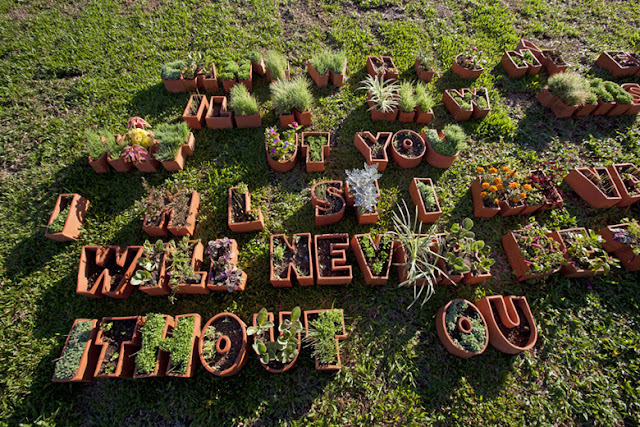
Inhotim’s installations demand direct participation between the viewer and the art object. It’s nearly impossible to have a passive viewing experience. On a massive lawn, for instance, hundreds of scattered pots in the shape of letters await patrons, who are encouraged to spell their names and then plant flowers inside them. Across the lake, a giant kaleidoscope by Danish artist Olafur Eliasson (“Vi
ewing Machine”) offers a stunning vision of the mountainside."
Source:  huffingtonpost
“Viewing Machine” by Olafur Eliasson. This work Olafur Eliasson based on the principles of operation of the kaleidoscope, generating an effect obtained by the reflection of light in six mirrors that form a hexagonal tube. The visitor is invited to handle this machine, pointing it at a point of interest, inside or outside the gallery space. Through the superposition of reflections, a myriad of shapes is disclosed. Photo by Zach Udko

Photo divulgação Inhotim


In August 2015, Inhotim reached the 2-million-visitor mark. These visitors came from the most diverse places and realities since the park was first opened to public visitation back in 2006.

Opening hours
Park
Tuesday to friday: 9:30 a.m. to 4:30 p.m.
Saturday, sunday and holidays: 9:30 a.m. to 5:30 p.m.

Admission
Values
Tuesdays and Thursdays: R$ 25,00
Wednesdays (except for holidays): free admission
Fridays, Saturdays, Sundays and Holidays: R$40,00
Closed on Mondays.
Free entrance
Friends of Inhotim and children up to 5 years old.

For more information, visit www.inhotim.org.br.

Monday, March 28, 2016

Belo Horizonte, Minas Gerais Capital

View of Belo Horizonte. Photo: wikipedia
Belo Horizonte (was named for its beautiful view of nearby mountains.), the city that wins over your heart. Known to the locals as Beagá (pronounced 'bay-ah-gah', Portuguese for BH).

The first planned city in the country of the republican period and projected to be the new capital of Minas Gerais, the “Minas City” (Cidade de Minas), as the capital was known in the past, was inaugurated on December 12th, 1897. The name “Belo Horizonte” was definitively adopted four years later, in 1901.

Capital of Minas Gerais, Belo Horizonte is located in the southeast region and is the sixth most populous city in the country and has been indicated by the Population Crisis Committee of the United Nations as the city with the best quality of life in Latin America and is 45th among the 100 best cities in the world. Today, the city has the fifth largest GDP among the Brazilian municipalities, represented 1.38% of the total wealth produced in Brazil. An evidence of the city’s development in recent years is the magazine América Economía’s classification, in which Belo Horizonte appears, in 2009, as one of the 10 best cities in which to conduct business in Latin America, in front of cities like Rio de Janeiro, Brasília, and Curitiba.

In addition, it is a reference in business and health tourism. Currently, it is the seventh Brazilian city that most receives international events, according to the International Congress and Conference Association’s (ICCA) ranking.

Stage for grand cultural spectacles, the city’s calendar is always replete with events, offering programming for all tastes. Its touristic diversity attracts people from Brazil and the world, enchanted with art, music, theater, dance and literature, making the city standout as contemporary and surprising.

Framed by the Serra do Curral mountain range, Belo Horizonte received the title “Garden City” for being one of the most arboreal cities in the country. 

Modern, with a quality tourist infrastructure and a vast range of servicies, Belo Horizonte has been consolidating it’s position as a center for touristic promotion. Whether in its tradition or modernity, the people’s hospitality, values, and affection are registered characteristics, creating an appeal a part, always welcoming and encouraging tourists to come back.

Walk down the buzzing cosmopolitan streets of the Savassi neighborhood on a Saturday evening, eat at one of the fine restaurants in Lourdes, stroll through the densely packed stalls at Mercado Central, attend a weekend street fair or a concert at the Palácio das Artes, or visit the Inhotim art museum west of the city, and you’ll see that Belo Horizonte has countless dimensions.
Praça da Liberdade (Liberty Square) and Downtown Belo Horizonte. Photo: wikipedia

Photo: google

Photo: google

Municipal Park of Belo Horizonte. Photo: wikipedia

São Francisco de Assis Church in Pampulha Park. Photo: google

Downtown Belo Horizonte, Savassi region. Photo: wikipedia

Pampulha Art Museum. Photo: wikipedia

Pampulha lake. Photo: wikipedia

Belo Horizonte is internationally known as the "capital of neighborhood bars." Every year, the city hosts the Comida di Buteco festival ("Pub Foods", in an approximate translation), in which a panel selects 41 bars to be visited, and then elects the one with the best appetizers using the theme ingredient of each year.

Minas Gerais' cuisine is famous for its traditional dishes, like pão de queijo, feijão tropeiro, tutu de feijão, pork ribs, chicken-and-okra (served with a rich, brown gravy and rice) and other usually heavy, comfort-like food. The city also abounds with pizza places, barbecue houses, fine restaurants of various nationalities and other options.
Pão de queijo with coffee, traditional snack of Minas Gerais. The regional Minas Gerais' food and the now internationally known drink of cachaça are very popular and highly rated in the capital. Photo: wikipedia

Surroundings

The capital is located near important touristic destinations such as the Rota Lund (Lund Route), with its precious archeological material and numerous caves, home of Luzia, the oldest fossil in the American continent. Right in front we have the Serra do Cipó National Park, a well-known spot for adventure tourism.

Located 70 km from Belo Horizonte is Inhotim Museum of Contemporary Art, the greatest open-air museum in the world. In the same surroundings, we can find the cradle of Brazilian baroque style, produced by master Aleijadinho during the colonial period, the historical cities Mariana, Ouro Preto and Congonhas, approximately 100 km from the state capital.