Showing posts with label wetland. Show all posts

Wednesday, June 17, 2015

Our beautiful Pantanal!!


The Pantanal has the greatest concentration of fauna in the Americas. People outside Brazil know only the Amazon. . . it's a shame because the Pantanal is a very important ecological place (Dr. Maria Tereza Jorge Pádua, Former Director, Brazil's National Parks).

The Amazon gets the press coverage, but the Pantanal is a better place to see wildlife. The dense foliage of the Amazon makes it difficult to observe the animals, but in the open marshes of the Pantanal, wildlife is much easier to spot. If you like to see animals in their natural environment, the Pantanal should not be missed.

With a total area of almost 195 000 square kilometres (or 75 000 square miles), the Pantanal is the largest wetland in the world. The vast majority of it is in the state of Mato Grosso do Sul, but it also extends into Mato Grosso and the separate countries of Paraguay and Bolivia, which neighbour Brazil.

Photo: Mirian Coura Aveiro

Photo: Valentim Manieri

Photo: Valentim Manieri

Photo: Mirian Coura Aveiro

Photo: Mirian Coura Aveiro

Photo: Valentim Manieri

Photo: Mirian Coura Aveiro

Photo: wikipedia

Photo: Lucas Leuzinger

Photo: Valentim Manieri
Photo: sunvilcouk

Birdwatching tour. Photo: enjoyourholiday

Photo: Roberta Coelho
This area is an unparalleled wildlife sanctuary of spectacular beauty, an ecological paradise containing hundreds of species of birds, thousands of varieties of butterflies, myriads of brightly colored flowers, and shoals of fish. Capuchin and Howler monkeys, capybaras, toucans, anacondas, caimans and tapirs help create an aquatic and sylvan theater of sights and sounds. The endangered jaguar, and increasingly rare Hyacinthine macaws and giant river otters, all make their home in the Pantanal. The Pantanal also provides incalculable economic benefits. It offers a huge area for water purification and groundwater discharge and recharge, climate stabilization, water supply, flood abatement, and an extensive, transport system, among numerous other important functions. And yet, despite the region’s beauty and remarkable environmental and economic value, the Pantanal remains poorly known and faces an uncertain future stemming from a myriad of socioeconomic pressures.


Young Caiman. Photo: pixdaus

Photo: devwijewardane

Photo: Valentim Manieri

Photo: Valentim Manieri

Photo: wildlife

Photo: enjoyourholiday

Photo: Valentim Manieri

Photo: wikipedia

Photo: wikipedia

Photo: wikipedia

Photo: wikipedia

During the rainy season, between October and March, the Pantanal is practically impassable by land. The rest of the year, the soil form an excellent pasture for livestock. Because about 80% of the wetlands are submerged during the wet season, the species here include aquatic ones, making it an even more diverse and fascinating destination to consider. The water can rise by up to five metres during the wet season. The daily highs average an annual mean of 25 degrees Celsius.

However, summer days have been known to soar to a scorching 40 degrees, while winter nights can plummet to zero.

The Pantanal’s dry season extends from April to October of each year. During this time, it is possible to access the region by road. During the wet season, however, visitors may be forced to enter only by aeroplane. Because this area is popular amongst tourists, there is ample accommodation available, as well as organised tours and activities. Some of these activities include:

• Horse riding
• Hiking and walking trails
• Game viewing and photography
• Exploring the wetlands on canoe or boat
• Catch-and-release fishing
• Bird watching (particularly rewarding over October and November)

Even during warmer seasons, the nights in the Pantanal can become crisp and cold. Therefore, tourists are urged to bring some warm clothing, regardless of when they are visiting.

One of the region form the Mato Grosso Pantanal National Park located on the border of MS and MT states.

some search: brazilorg and pantanalorg

Saturday, April 11, 2015

Brazil: Campo Grande, Mato Grosso do Sul Capital.


Campo Grande is marked by cultural diversity. Sum of people who made the Brazilian Midwest a rich meeting of traditions and customs. State capital which concentrates the second largest indigenous community in the country, the city mixes the influences of various ethnic groups, especially the border neighbors.

Pioneered by miners, South Mato Grosso Capital welcomed Arab immigrants, Japanese, Spanish, Italian and Brazilian from various states. It is affectionately called "Morena" City (Cidade Morena) because of the reddish-brown colour of the region's soil.

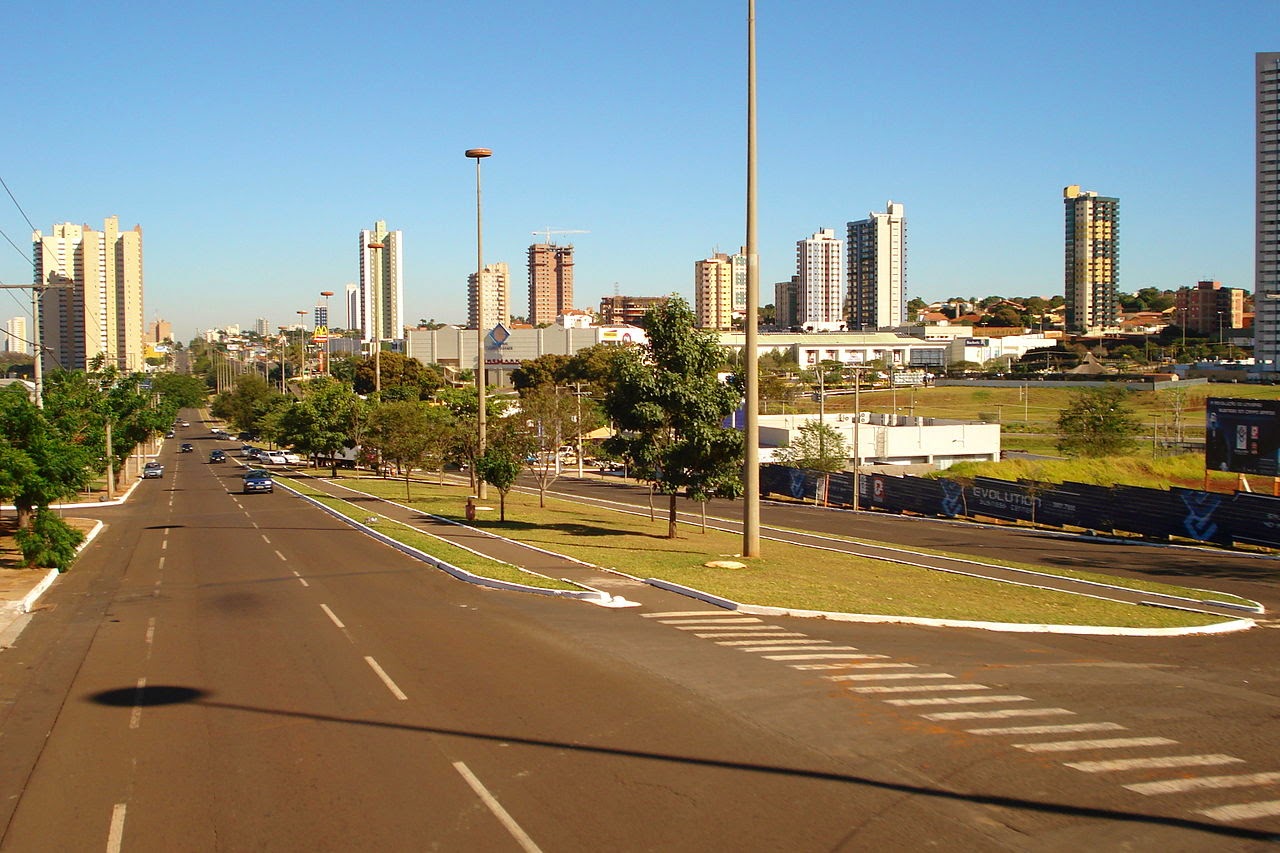
Many visitors consider Campo Grande a convenient hub on the way to the southern Pantanal wetlands, but it has its own noteworthy attractions. The city is relatively flat with wide, leafy avenues, making it a pleasant place to explore on foot. A diverse population and vibrant nightlife, in part thanks to the presence of four universities in the city, add to the convivial atmosphere.

Manganese, rice, soy and cattle are the traditional sources of its wealth, while education, commerce and tourism are growing industries. Campo Grande lies 716 km south of Cuiabá and 403 km southeast of Corumbá.

In the beginning of the 20th century, the Western Brazilian Army Headquarters was established in Campo Grande, making it an important military center.


Planned and tree lined, the Mato Grosso do Sul capital is a mix of cultures. From the indigenous tribes of the region comes the beautiful crafts with lots of ceramic and wood parts, besides the colorful tapestries. From the neighboring country, Paraguay, the influence is gastronomic and features "chipa" - a kind of compact mass of cheese bread - and the Paraguayan soup, which is actually a salted pie. To follow, "tereré", a kind of iced tea. Also is part of the regional cooking the Japanese dishes, heritage of immigrants who came from across the world in the early 20th century. The highlight is the "sobá", a handmade pasta enhanced with omelette and pork.
Photo: maridonacozinha

Oriental delicacies are found in Central Fair, near the train station and filled with kiosks that also sell fruit, vegetables, crafts and imported goods from Paraguay. The space works only on Wednesdays and weekends, from five in the afternoon to two in the morning, with intense movement in the little stands selling food and drink.

The Paraguayan recipes are served at the City Market, which opens on Sundays. Exotic and typical dishes of the Pantanal are also found in Campo Grande. In regional restaurants, menus bring alligator stew, "pintado" fish with plantain and annatto, piranha broth etc

Must also visit the Memorial of Indigenous People, where there is a community of Terena Indians and sale of handicrafts. The Memorial is one of the attractions of the City tour, a tour conducted in double-decker buses with tracking guide. The program lasts just over two hours and goes through more than 40 attractions among squares, streets and historic buildings.

double-decker bus
Memorial of Indigenous Peoples. Photo: pmcgmsgov

Photos: Natubela
Here it's a little of Indian handicrafts, especially the Terena and Kadiwéu, that is also very present in the State. In the productions of the Terena the tribal motifs are in ceramics, ornaments and objects made with straw, clay and weaving. In the Kadiwéu crafts, the raw material is clay.

Pottery produced by Terena Indians are beautiful and recognized by the drawing floral, dotted, dashed, spiral and wavy. Common parts are vases, jars, pots, jars, animals of the Pantanal region (snakes, frogs, alligators and little wetland animals), and pipes, musical instruments and various adornments.
Mostly, Terena vases are very popular in Mato Grosso do Sul and have good acceptance of the tourists. 

Photo: otavianonews

The newness of the capital is the return of the Pantanal Train that, after 18 years standing, back to do one of the most beautiful trips in the country. The compositions start from Campo Grande on Saturday towards the city of Miranda. From the windows, may be seen typical landscapes - savannah, herds of cattle, blue macaws ... The return trip takes place on Sundays. The route is 220 km and makes a stop in Aquidauana.

Pantanal Train


Be sure to know the squares of macaws, large monuments to this bird, which is always present in the large field of the sky, and is an icon of the city.

Square of Macaws

Fotos: google


Tuesday, March 31, 2015

Brazil: Mato Grosso do Sul State - "Thick Forest of the South"

The good in doing tourism in Brazil are the numerous options that our country offers. Mato Grosso do Sul is a great picture of it. The state compensates for the fact of not being bathed by the sea, with priceless scenarios. Crystal clear rivers, waterfalls, caves, dense tracks the immensity wetland flooded ... phew! It's difficult to talk about this natural wilderness.

Photo by Mirian Coura Aveiro

Photo by Mirian Coura Aveiro

Photo by Mirian Coura Aveiro

Known for its biodiversity, ecotourism is an important attraction in Mato Grosso do Sul, especially in the southern region of Pantanal. Recognized by Unesco as a World Natural Heritage and a Biosphere Reserve, Pantanal is a plain that is subject to periodic flooding and one of the most diverse natural reserves on the planet. The main town in Pantanal is Corumbá, where sport fishing is a strong attraction.

Photo by Valentim Manieri

Photo by Mirian Coura Aveiro

The Correntoso a Cavalo Route, comprising the municipalities of Aquidauana, Corumbá and Miranda offers a ride through some of the most beautiful landscapes in Pantanal. It is a 7-8-day horse ride with stops at three lodges, each with different attractions but all with good infrastructure such as rooms with air-conditioning, swimming pools, Pantanal horses and typical regional cuisine.

The ongoing work of erosion has ensured the current shape of the Bodoquena Mountain Range, where the town of Bonito is located. The area houses huge caves crossed by rivers of clear water, which are ideal for diving.
Negro River, Pantanal, Mato Grosso do Sul / Photo: Embratur

The state capital, Campo Grande, is marked by the diversity of customs, music and cuisine and reflects unique cultural traits due to the natural heritage left by the Indians and Europeans, Japanese, Paraguayans, Bolivians and migrants from other states. (Source: Embratur)

Campo Grande, the Capital. Photo by viajeaquiabril

Mato Grosso do Sul is one of the most aesthetically beautiful states in Brazil in terms of its abundant plant and animal species and its gorgeous views. This makes it a popular destination amongst tourists from Brazil as well as from other countries all over the world. It is surrounded by the states of Mato Grosso, Goiás, Minas Gerais, São Paulo and Paraná as well as by the South American countries of Paraguay and Bolivia. Mato Grosso do Sul maintains good relationships with these neighbouring countries, largely because of its location and the relative challenge of accessing other great centers in Brazil that it experiences. Therefore, some of its culture, customs and peoples reflect those of such neighbours, integrating these nations with one another to a certain, yet significant, extent.

Photo by Valentim Manieri

Photo by Valentim Manieri

The name "Mato Grosso do Sul" literally means "Thick Forest of the South" in Portuguese, a name inherited from its northern neighbour state of Mato Grosso, of which it was part until the 1970s. It is not uncommon for people to mistakenly refer to Mato Grosso do Sul as simply "Mato Grosso". Other names that were proposed, at the time of the split and afterwards, include "Pantanal" (a reference to its best known geographical feature) and "Maracaju" (a reference to the Maracaju mountain range that crosses the state from north to south).

This State is hot and humid and its boasts subtropical and tropical climates. Even the cooler winter months are sunny, with daytime highs of about 24 degrees Celsius. The distinct rainy season extends from October to March of every year. With these ample rains, the marshes fill with water, creating a complex system of waterways on which boats provide the main source of transport. Gallery forests and stream valleys cut through vast savannahs in this country, creating a spectacle of natural wonder. There are a large number of grottos and caves, which have been protected from the harmful effects of human habitation to an enormous degree, ensuring that their splendour is authentic and breath-taking in its simplicity.

Photo by Valentim Manieri
"Here where the river embraces the forest and where the waters kiss the trees we feel the eternal presence of God " - Valentim Manieri
Photo by Valentim Manieri

One of the major obstacles to the industrial sector in Mato Grosso do Sul is the distinct lack of power, which is a necessary resource for almost every form of business. While the service sector maintains dominance in its contribution to the region’s GDP (Gross Domestic Product), it is closely followed by agriculture. Soybeans, pork and chicken are very important products of the region and are also major exports. In addition, wheat and cotton are vital crops.
Truck on a scale with a load of soybeans in Brazil, soy storage silos in the background. Photo by brazilorg

Mato Grosso do Sul boasts a number of tourist attractions, most of which are centered on the incredible natural beauty of the area. Some of these include:

• The Rio da Prata (River of Silver) in Jardim.
• Pantanal – the exquisite tropical wetland and the largest flooded lowland in the world.
• Bonito – famous for its clear waters and impressive geological formations. While here, visit Gruta Lago Azul (Blue Lake Cave), Fazenda Estancia Mimosa, Aquario Natural and the Sucuri, Prata, and Formoso rivers.
• The Maracaju Mountain Range
• Corumbá – also called “The White City” for its high percentage of calcium

source: brazilorg